Minnesota Dog Registration Information
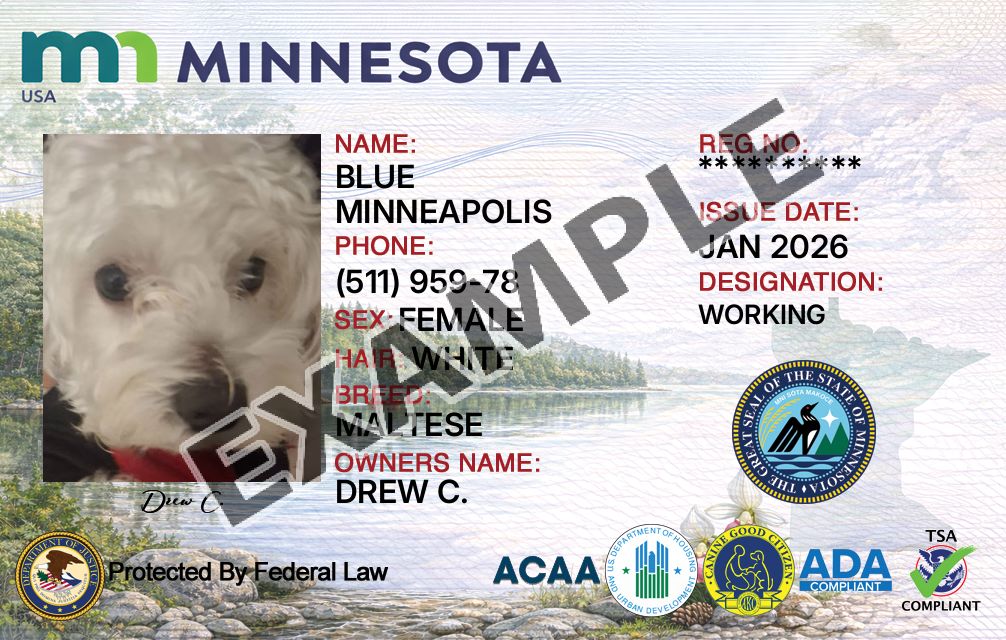
State Licensed, Service Dogs and Emotional Support Dogs in Minnesota
Registering Your Dog in Minnesota (Service Dog or Emotional Support Dog)
If you’re searching where do I register my dog in Minnesota for my service dog or emotional support dog, the most important thing to know is this: in Minnesota, “registration” usually means getting a dog license through your local city or county (often the animal control office, city clerk, or a municipal licensing department). There is no single statewide service-dog registry that replaces a local dog license in Minnesota.
Where to Register or License Your Dog in Minnesota
Because licensing is handled locally, start with your city animal control or city clerk/licensing office. Below are examples of official Minnesota offices that sell pet licenses or provide animal control licensing services. If you do not live in one of these cities, use them as a model for the type of office you should contact in your own community when asking where to register a dog in Minnesota.
Example Local Licensing Offices (Official)
| Office | Address | Phone | Office Hours | |
|---|---|---|---|---|
Minneapolis Animal Care & ControlCity of Minneapolis
|
212 17th Ave. N. Minneapolis, MN 55411 |
612-673-6222 | Not listed |
Mon–Fri: 11 a.m.–6 p.m. (all other services)
Sat: 9 a.m.–3 p.m. (all other services) Sun: Closed |
Saint Paul Animal Control (Department of Safety & Inspections)City of Saint Paul
|
1285 Jessamine Ave W Saint Paul, MN 55108 |
651-266-1100 | Not listed |
Phone: Mon–Fri 8:30 a.m.–5:00 p.m.
Shelter: Mon–Fri 12:30 p.m.–4:30 p.m. |
Duluth City Clerk (Pet License Contact)City of Duluth
|
City Hall, Room 318 411 W 1st St Duluth, MN 55802 |
218-730-5500 | Not listed |
Mon–Fri: 8:30 a.m.–4:00 p.m.
|
Duluth Animal Shelter (Animal Control)City of Duluth
|
2627 Courtland St Duluth, MN 55806 |
218-730-4346 | Not listed |
Mon–Fri: 8:00 a.m.–4:00 p.m.
|
Overview of Dog Licensing in Minnesota
What “registering your dog” usually means
In Minnesota, when people ask where do I register my dog in Minnesota for my service dog or emotional support dog, they’re usually referring to a local pet license. A dog license in Minnesota is a local registration record (plus a tag) that helps animal control identify your dog and contact you quickly if your dog is lost.
Who runs dog licensing in Minnesota?
Minnesota does not operate one single statewide “dog licensing office.” Instead, licensing is commonly managed by a city animal control unit, a city clerk’s office, or another municipal licensing department. In some areas—especially outside of larger cities—your county may handle animal control functions, while the city/township may still set licensing rules.
Why local licensing matters (even for service dogs)
Local licensing and “service dog status” are two separate concepts. A city license is about compliance with local animal ordinances (like rabies vaccination, identification, and leash laws). Service dog protections are about disability access rights. You may need both: a local license tag for compliance and the dog’s training/behavior for public access as a service animal.
Rabies vaccination: a common requirement for licensing
Many Minnesota cities require proof that your dog is current on rabies vaccination before issuing a license. Rabies is a fatal disease and is a public health concern in Minnesota; state public health guidance highlights rabies risks and prevention information for residents and pets. If your dog is not current, you may need to vaccinate first, then apply for your license.
How Dog Licensing Works Locally in Minnesota
Step 1: Identify your local licensing authority
Start by figuring out who issues licenses where you live. In many Minnesota communities, the licensing point of contact is: Animal Control, a municipal shelter, the city clerk, or a city’s regulatory services department. If you live in a large city, the city often provides an online application and an in-person option.
Step 2: Prepare required documentation
While rules vary by city, licensing frequently requires a current rabies vaccination record. Some cities also request additional documentation, such as spay/neuter proof for discounted fees. If you’re looking for an animal control dog license Minnesota process, expect to provide identification details about the owner and the dog (name, address, and basic description).
Step 3: Apply and pay the fee (if applicable)
Local offices typically offer one or more of these options: in-person purchase, mail-in application, or online application. Fees can differ by city and may depend on whether the dog is spayed/neutered and other local categories. Some cities waive or reduce fees for qualifying residents, and some may issue licenses at no charge for service dogs—check your city’s rules.
Step 4: Keep your tag current and renew as required
A license often comes with a tag that should be attached to your dog’s collar. Renewal frequency varies (commonly annual). If you move within Minnesota, you may need to update your information or re-license in your new city.
Avoid confusion: “dog license” vs. “service dog registration”
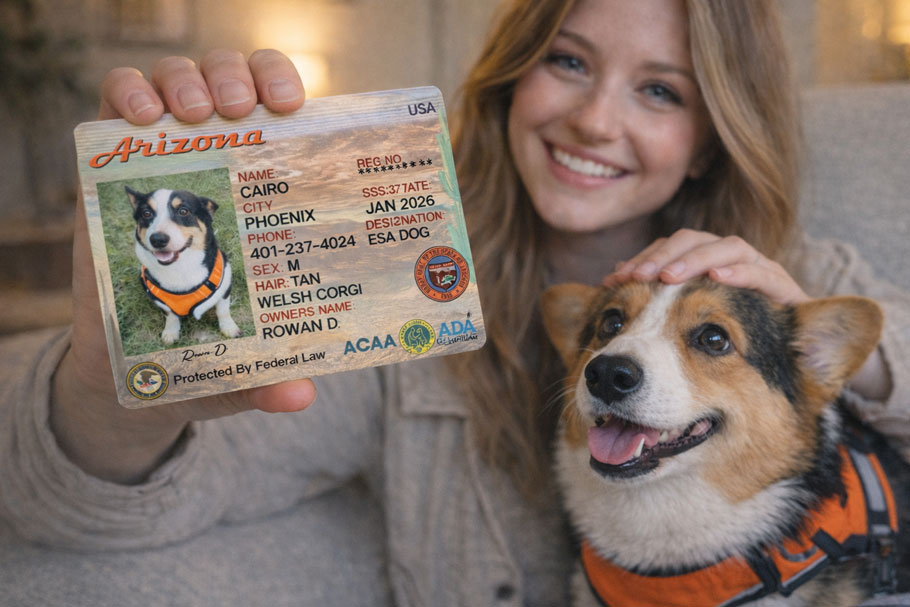
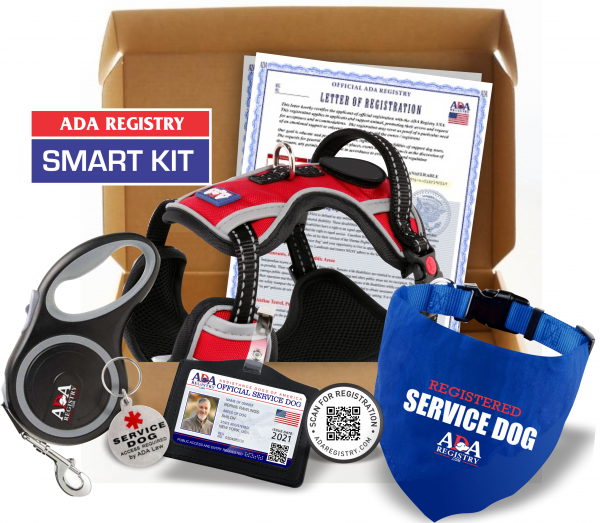
If you are trying to figure out where to register a dog in Minnesota and you encounter paid “registrations,” pause and verify what you actually need. For local ordinance compliance, the key item is usually your city’s official pet licensing process—not a third-party certificate.
Service Dog Laws in Minnesota
Service dogs are defined by work or tasks, not by a license
A service dog is generally a dog trained to do specific work or tasks for a person with a disability (for example, guiding, alerting, retrieving, interrupting certain symptoms, or providing mobility support). The dog’s legal status comes from what the dog is trained to do and how it behaves in public—not from buying a vest, downloading a certificate, or registering in a database.
Local dog licensing can still apply
Even if your dog is a service dog, your city may still require a dog license in Minnesota (or within your city). Some Minnesota cities note that service dogs may qualify for a fee waiver while still receiving a license tag—meaning the local license record still exists even if the fee is reduced to $0.
Public access vs. housing vs. licensing
Service dog rules are often discussed in the context of public access (entering places where pets are not allowed). Dog licensing is separate: it’s a local identification and compliance system used by animal control. Housing rules (like reasonable accommodations) are also a separate category from local licensing.
Emotional Support Animal Rules in Minnesota
An emotional support animal (ESA) is not the same as a service dog
An emotional support animal provides comfort by its presence, but it is not trained to perform specific tasks in the same way a service dog is. That difference matters because an ESA does not automatically have the same public-access rights as a service dog.
ESAs and local licensing requirements
If your city requires licensing, an ESA is generally treated like any other dog for licensing purposes. In other words: even if your dog is an emotional support dog, you may still need a local animal control dog license Minnesota (depending on your city’s ordinance).
ESAs and “registration” claims
There is a lot of marketing online around ESA “registration.” For Minnesota residents, the practical step for local compliance is usually the city-issued license (if required), plus maintaining vaccination records. For housing or accommodation needs, you’ll typically follow the process required by the housing provider (which is separate from local dog licensing).
Frequently Asked Questions
Disclaimer: Licensing requirements and office locations may change. Residents should verify details with their local animal services office within Minnesota.
This page is informational and is intended to help you understand where to register a dog in Minnesota, how a dog license in Minnesota typically works, and how that differs from service dog and emotional support animal rules.
Register A Dog In Other Minnesota Counties
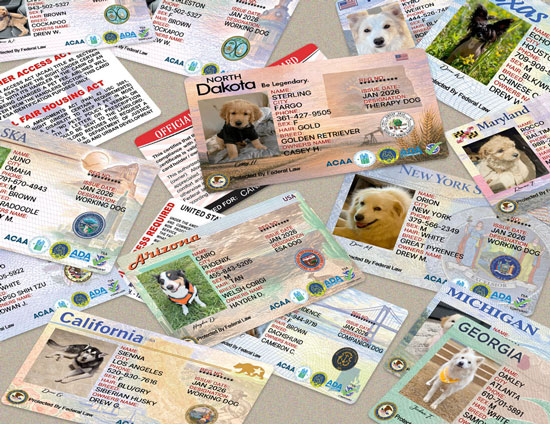
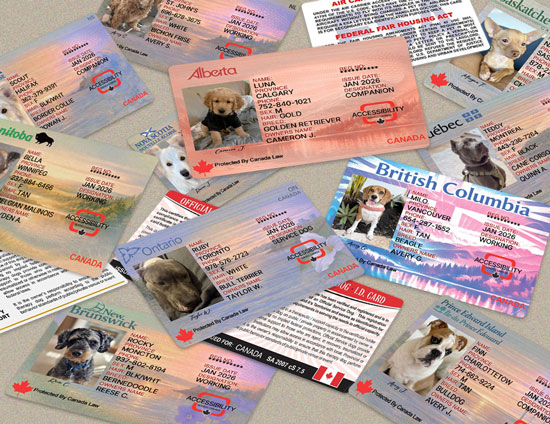
Select your county from the dropdown below to get started with your dog’s ID card. Requirements and license designs may vary by county, so choose your location to see the correct options and complete your pup’s registration.
- Aitkin County Dog Registration
- Anoka County Dog Registration
- Becker County Dog Registration
- Beltrami County Dog Registration
- Benton County Dog Registration
- Big Stone County Dog Registration
- Blue Earth County Dog Registration
- Brown County Dog Registration
- Carlton County Dog Registration
- Carver County Dog Registration
- Cass County Dog Registration
- Chippewa County Dog Registration
- Chisago County Dog Registration
- Clay County Dog Registration
- Clearwater County Dog Registration
- Cook County Dog Registration
- Cottonwood County Dog Registration
- Crow Wing County Dog Registration
- Dakota County Dog Registration
- Dodge County Dog Registration
- Douglas County Dog Registration
- Faribault County Dog Registration
- Fillmore County Dog Registration
- Freeborn County Dog Registration
- Goodhue County Dog Registration
- Grant County Dog Registration
- Hennepin County Dog Registration
- Houston County Dog Registration
- Hubbard County Dog Registration
- Isanti County Dog Registration
- Itasca County Dog Registration
- Jackson County Dog Registration
- Kanabec County Dog Registration
- Kandiyohi County Dog Registration
- Kittson County Dog Registration
- Koochiching County Dog Registration
- Lac qui Parle County Dog Registration
- Lake County Dog Registration
- Lake of the Woods County Dog Registration
- LeSueur County Dog Registration
- Lincoln County Dog Registration
- Lyon County Dog Registration
- Mahnomen County Dog Registration
- Marshall County Dog Registration
- Martin County Dog Registration
- McLeod County Dog Registration
- Meeker County Dog Registration
- Mille Lacs County Dog Registration
- Morrison County Dog Registration
- Mower County Dog Registration
- Murray County Dog Registration
- Nicollet County Dog Registration
- Nobles County Dog Registration
- Norman County Dog Registration
- Olmsted County Dog Registration
- Otter Tail County Dog Registration
- Pennington County Dog Registration
- Pine County Dog Registration
- Pipestone County Dog Registration
- Polk County Dog Registration
- Pope County Dog Registration
- Ramsey County Dog Registration
- Red Lake County Dog Registration
- Redwood County Dog Registration
- Renville County Dog Registration
- Rice County Dog Registration
- Rock County Dog Registration
- Roseau County Dog Registration
- Scott County Dog Registration
- Sherburne County Dog Registration
- Sibley County Dog Registration
- St. Louis County Dog Registration
- Stearns County Dog Registration
- Steele County Dog Registration
- Stevens County Dog Registration
- Swift County Dog Registration
- Todd County Dog Registration
- Traverse County Dog Registration
- Wabasha County Dog Registration
- Wadena County Dog Registration
- Waseca County Dog Registration
- Washington County Dog Registration
- Watonwan County Dog Registration
- Wilkin County Dog Registration
- Winona County Dog Registration
- Wright County Dog Registration
- Yellow Medicine County Dog Registration